
Supplier Guide
How to evaluate a Chilean mussel supplier from Chiloé
A practical buyer guide for evaluating Chilean mussel suppliers from Chiloé.
Chile is one of the world's largest mussel exporters, and most production is concentrated on Chiloé Island. But not every supplier operates at the same level — some own their farms and plants, others are traders who consolidate product from third parties. This guide walks through the questions a seafood importer or procurement team should ask before committing to a Chilean mussel supplier, and what good answers look like.
1. Start with farming access
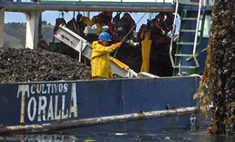
The first question is simple: does the supplier control where the mussel begins? A vertically integrated supplier with its own farming concessions can explain exactly where, how, and in what water conditions the mussels are grown. Toralla, for example, manages more than 250 hectares of sea through its farming subsidiary Cultivos Toralla S.A., using long-line suspended cultivation in the Chiloé channels. Long-line farming grows mussels on ropes suspended in the water column, so they never touch the seabed — which keeps the product clean and consistent.
A supplier that only buys raw material from other farms cannot give you the same traceability or consistency guarantees. Ask directly whether the farm and the plant are the same legal entity.
2. Check processing capacity and continuity
Capacity tells you whether a supplier can support a recurring program rather than just one-off spot sales. Toralla operates a 4,000 m² plant in Chonchi with the ability to process 100 to 300 MT of raw mussel per day and 65,000 m³ of cold storage at -18°C. Numbers like these matter because mussel harvests are seasonal — a supplier with real processing and storage capacity can smooth out supply across the year, while a small trader may run short exactly when you need volume.
Ask about seasonal availability, typical lead times, and how the supplier handles peak-season demand.
3. Demand full traceability
Traceability is the backbone of any credible seafood supply relationship and a hard requirement for EU and US import. A serious supplier should be able to trace a finished carton back through cold storage, packing, IQF freezing, cooking, debyssing, washing, and finally to the harvest batch and farming zone. Toralla describes a continuous process from sea extraction through to palletized frozen product taking about 20 minutes inside the plant, with monitoring from seeding through harvest.
Ask to see a sample traceability record. If a supplier cannot produce one, treat that as a red flag.
4. Verify certifications — all of them, in one pack
For regulated markets you need a complete certification set, not just one badge. The baseline to request:
- MSC (Marine Stewardship Council) — sustainability and chain of custody. Toralla was the first Chilean mussel fishery to earn MSC certification.
- BRCGS or equivalent recognized food-safety standard
- HACCP / APPCC — hazard analysis and critical control points
- Friend of the Sea — additional sustainability certification
- Sernapesca export approval (the Chilean health authority) and US FDA registration
A supplier that can hand you all of these in a single document pack is organized and audit-ready. One that produces them slowly or partially is a compliance risk.
5. Confirm the supplier's track record
Chilean customs data is partially public through services like Veritrade and Volza. Before committing, check that the supplier has consistent export volume across multiple years and documented shipments to regulated markets such as Spain, the Netherlands, the United States, and Greece. Request the supplier's RUT (Chilean tax ID) and cross-check it against the Sernapesca approved-exporter list and the MSC fisheries database. An established exporter will welcome this kind of due diligence.
6. Nail down the commercial details before ordering
Once a supplier passes the checks above, confirm the specifics that affect your landed cost and shelf life:
- Product format and size grade
- Glaze percentage and net versus gross weight
- Packaging, carton weight, and palletization
- Shelf life and production dates
- Destination port and required customs documentation
- Incoterms and lead time
The bottom line
A strong Chilean mussel supplier owns its farming and processing, holds a complete and current certification set, can prove traceability from sea to container, and has a verifiable multi-year export record. Toralla S.A. meets each of these criteria as a vertically integrated, MSC-certified processor in Chiloé. Use the questions above as a checklist on any supplier you evaluate, and request the supporting documents in writing before you place a first order.