
Product Guide
IQF mussel meat sizes explained for foodservice and processors
A guide to IQF mussel meat sizes including 300/500, 200/300, and 120/200 pieces per kg.
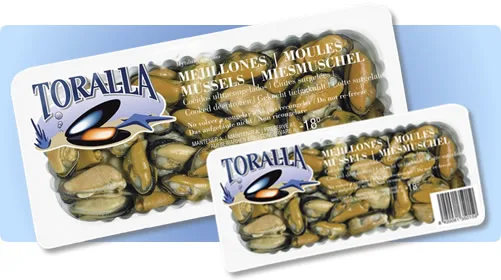
What IQF mussel meat is
IQF stands for individually quick frozen. Instead of freezing mussel meat in a solid block, each piece is frozen separately on a moving belt at very low temperature. The result is loose, free-flowing mussel meat that does not clump together. For a buyer, this means you can pour out exactly the portion you need, reseal the bag, and return the rest to the freezer without thawing the whole batch. That single property is why IQF mussel meat dominates foodservice and industrial seafood programs: it gives portion control, reduces waste, and keeps labor costs low.
Toralla S.A. produces IQF mussel meat from Mytilus chilensis, the Chilean blue mussel farmed on long lines in the cold channels of Chiloé. The mussels are washed, shelled, debyssed (the beard removed), cooked, individually quick frozen, graded by size, packed, and palletized. Because the meat is already cooked and shell-free, it drops straight into recipes with no further preparation.
How the size grading system works
IQF mussel meat is sold by piece count per kilogram, not by individual weight. A "300/500" grade means there are roughly 300 to 500 individual mussel pieces in one kilogram — so each piece is small. A "120/200" grade means only 120 to 200 pieces fill a kilogram, so each mussel is large. The higher the numbers, the smaller the mussel. This is the opposite of what many first-time buyers expect, so it is worth confirming on every order.
| Grade | Pieces per kg | Piece size | Best for |
|---|---|---|---|
| Small | 300 / 500 | Smallest | Soups, sauces, paella, seafood rice, fillings |
| Medium | 200 / 300 | Mid-range | Pasta, seafood mixes, foodservice portions |
| Large | 120 / 200 | Largest | Premium ready meals, tapas, visible plating |
| Industrial | 500+ | Very small | Bulk recipe dosing, processing inputs |
Small grade: 300/500 pieces per kg
Small mussel meat is the workhorse grade for recipes where the mussel is an ingredient rather than the centerpiece. It distributes evenly through paella, seafood rice, chowders, soups, sauces, and empanada or pie fillings. Because the pieces are small, they cook quickly and spread cost efficiently across a large batch. Industrial buyers and ready-meal producers often standardize on this grade for predictable dosing.
Medium grade: 200/300 pieces per kg
Medium is the most versatile grade and the most commonly ordered. It balances visible piece size against yield and cost, which makes it the default choice for pasta dishes, frozen seafood mixes, marinara blends, and general foodservice portioning. If you are unsure which grade fits a new program, medium is usually the safest starting point and the easiest to substitute later.
Large grade: 120/200 pieces per kg
Large mussel meat is the premium presentation grade. When the mussel itself needs to be seen and to read as generous on the plate — chilled seafood platters, tapas, higher-end retail ready meals, restaurant supply — the larger piece justifies a higher price point. Yield per kilogram is lower in piece count but the perceived value is higher, so margins can be stronger for the right end product.
Quality factors beyond size
Piece count is only the starting specification. Before confirming a purchase order, experienced buyers also check:
- Glaze percentage — the thin protective ice layer added during freezing. Higher glaze protects the product but means you pay for water weight, so confirm net versus gross weight.
- Count accuracy and tolerance — ask how tightly the supplier holds the stated grade and what tolerance band applies.
- Cook consistency — uniform cooking keeps texture even across the batch.
- Cold-chain integrity — product should stay at -18°C from plant to port without interruption.
- Packaging and carton format — bag size, carton weight, and palletization should match your warehouse and destination requirements.
Storage, handling, and shelf life
IQF mussel meat is kept at -18°C in cold storage and should not be allowed to partially thaw and refreeze, which damages texture and creates clumping. Toralla holds finished product in 65,000 m³ of cold storage at -18°C before shipping. Always confirm the production date, shelf life, and recommended storage temperature for your specific shipment, and request the documentation pack your destination market requires for customs clearance.
Why Chilean origin matters for mussel meat
Chile's Chiloé region produces Mytilus chilensis in cold, clean sub-Antarctic water using long-line suspended cultivation, where mussels grow on ropes without touching the seabed. This produces a clean, plump, consistent meat that has held EU and US import approval since the early 2000s. For buyers, Chilean origin combined with MSC certification is a recognized quality and sustainability signal that supports your own labeling and customer claims.