
Formats
Half shell vs whole shell mussels for seafood programs
Compare half shell and whole shell mussels for retail, foodservice, and seafood programs.
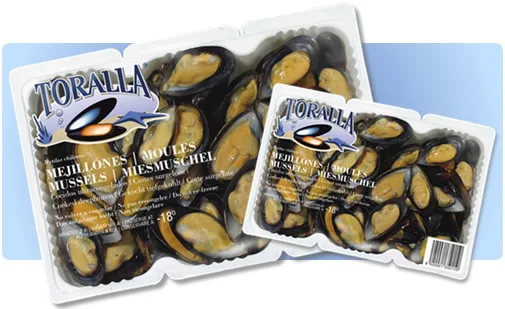
The difference in one sentence
Half shell mussels are cooked and served on one half of the shell with the meat exposed and ready to plate; whole shell mussels keep both shell halves closed around the meat for a natural, traditional presentation. Both are made from the same Chilean blue mussel (Mytilus chilensis) farmed in Chiloé, cooked, and IQF frozen — the difference is the presentation format, and that difference drives which buyer each one suits.
Half shell mussels: when to choose them
Half shell mussels (Spanish: media concha) arrive cooked, opened, and sitting on a single shell. The meat is exposed, which makes them ideal for any application where speed of service and visual presentation matter. They are widely used for:
- Retail oven-ready or grill-ready trays, often pre-topped with garlic butter, gratin, or sauce
- Foodservice starters and tapas where a plated mussel needs no further handling
- Catering and banquet service where kitchens need consistent, fast portioning
- Value-added seafood lines where a topping or marinade is added before repacking
The labor saving is the core selling point: the kitchen skips shelling and opening entirely. Add a topping, heat, and serve.
Whole shell mussels: when to choose them
Whole shell mussels (Spanish: entero) keep the mussel intact inside both shell halves. They read as the most natural, "just harvested" presentation, which is why they suit:
- Traditional moules-frites, marinière, and bouillabaisse-style dishes where the closed shell is part of the experience
- Retail frozen packs aimed at home cooks who want a recognizable whole mussel
- Seafood boils, paella, and mixed shellfish platters
- Markets where shell-on signals freshness and authenticity to the end customer
Because the shell stays on, whole shell mussels deliver visual integrity but require the end user to handle the shell during eating, which fits casual and traditional dining rather than fast plated service.
Size formats and grading
Toralla supplies both formats in two graded sizes, counted as pieces per kilogram. A lower piece count means a larger mussel.
| Grade | Pieces per kg | Notes |
|---|---|---|
| Select | 60 / 80 | Larger mussel, premium presentation |
| Normal | 80 / 100 | Standard size, strong yield and value |
Select grade gives a more generous mussel for premium retail and foodservice; Normal grade offers a better cost-to-yield balance for high-volume programs. Both grades are available in either half shell or whole shell.
Side-by-side comparison
| Factor | Half shell | Whole shell |
|---|---|---|
| Presentation | Open, meat exposed | Closed, natural |
| Kitchen labor | Lowest — add topping and heat | Low — cook and serve |
| Best service style | Plated, tapas, gratin | Traditional, casual, boils |
| Topping/sauce ready | Yes, ideal | Less suited |
| Typical channel | Foodservice, value-added retail | Retail, traditional foodservice |
What to confirm before ordering
For either format, request the following from the supplier before a purchase order:
- Shell integrity — percentage of broken or empty shells the supplier allows
- Glaze percentage — to understand net versus gross weight
- Packaging and carton weight — must match your warehouse and retail or foodservice format
- Palletization — cartons per pallet and pallet configuration for your destination
- Heat performance — how the product holds shell integrity through oven or steam reheating
- Documentation — health certificate, MSC chain-of-custody if labeled, and destination-market paperwork
Why both come from Chiloé
Both formats start with the same raw material: rope-grown Mytilus chilensis from Toralla's farming concessions in the Chiloé channels, cooked and IQF frozen in the Chonchi plant within about 20 minutes of entering the line. That shared origin means consistent meat quality regardless of which presentation you choose, backed by MSC certification and EU/US export approval.